
 o000418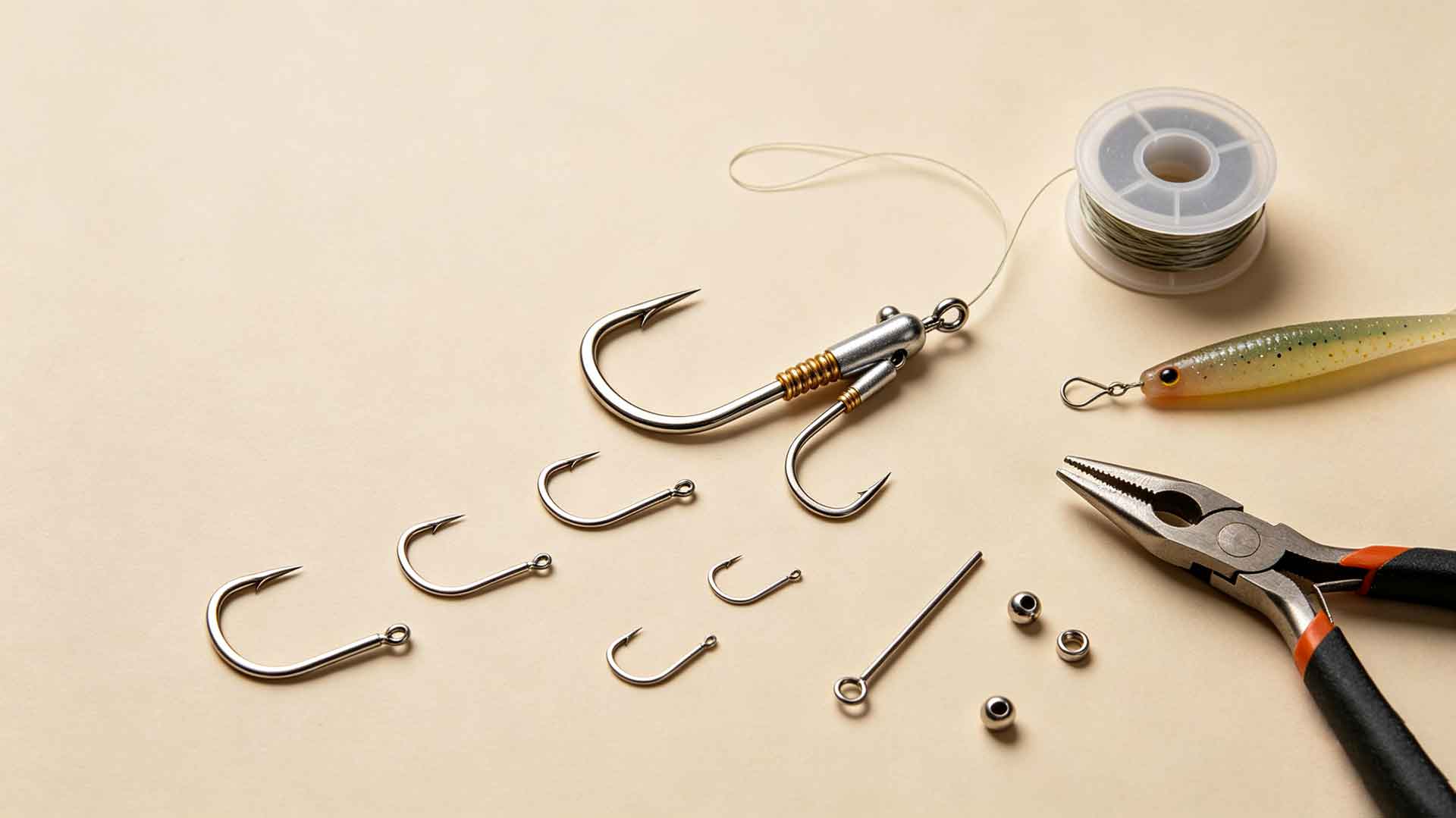
For many beginners, a fishing hook is just a piece of bent metal. But if you talk to any seasoned angler, they’ll tell you that the hook is the most critical link in your entire setup—the literal point of contact between you and your target. If your hook isn’t matched correctly to your bait or the species you’re chasing, even the most expensive rod won’t save your day.
If you’re still getting comfortable with your basic gear, be sure to start with our The Ultimate Beginner Fishing Setup Guide: Your Path to Success in 2026 to get your foundations right. Once you’re ready to get technical, let’s break down exactly what you need to know about hooks.
1. What Does a Hook Look Like? (Deconstructing the Anatomy)
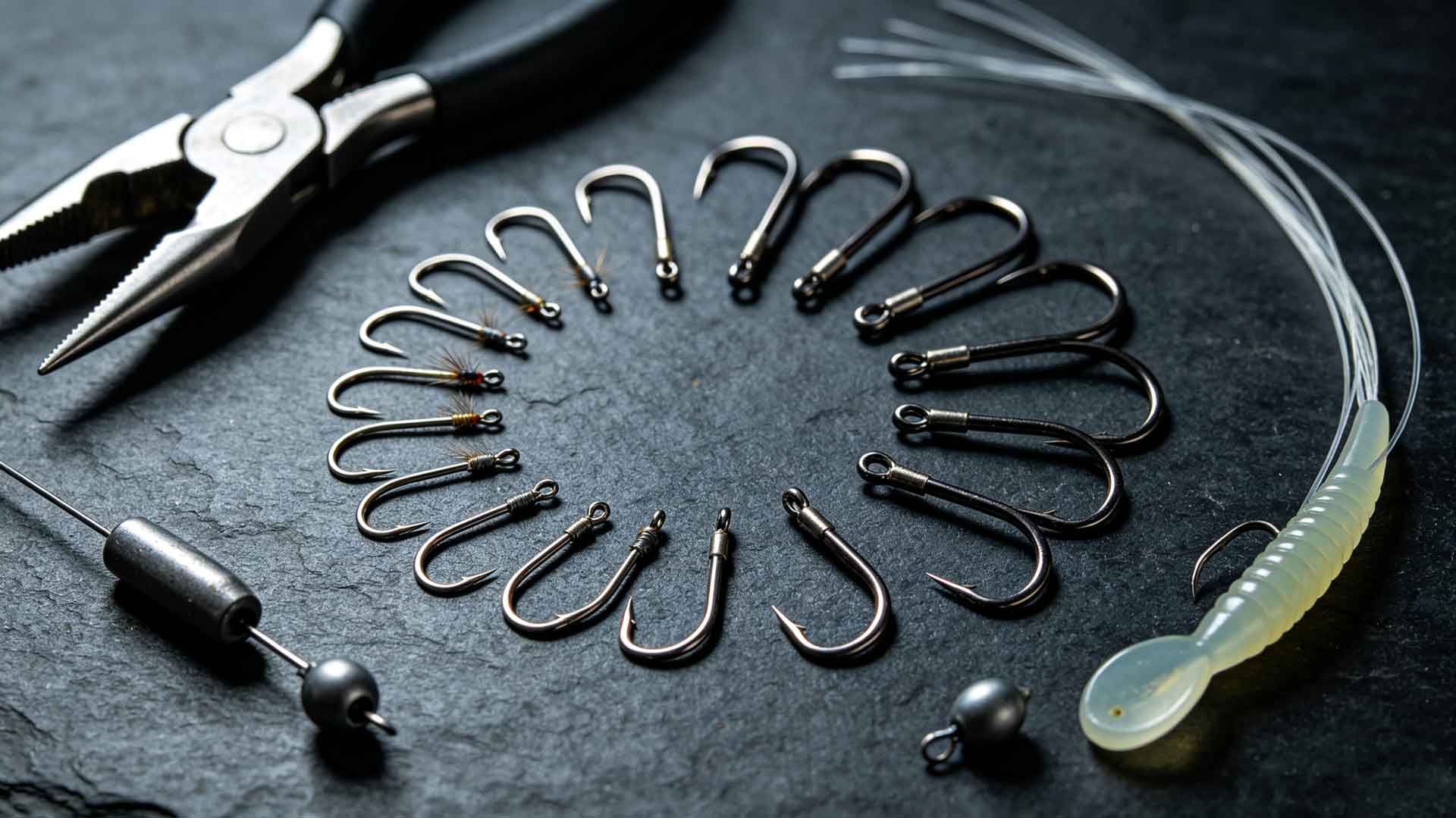
Before diving into the different types, it helps to understand that every hook consists of a few standard parts: the eye (where you tie the line), the shank (the straight part), the bend, and the point (which includes the barb).
When you ask, “what does a hook look like?”, the answer varies wildly based on its intended use. Some have long shanks for bait, while others have specialized curves for better hook-sets. Understanding this anatomy is part of the broader skill set we discussed in Fishing Hooks: A Beginner’s Guide.
2. Navigating Different Types of Fishing Hooks
There isn’t one “universal” hook. Different types of fishing hooks are designed for specific techniques and bait presentations. Here are the three most essential types for any beginner:
- J-Hooks (Baitholder/Aberdeen): These are the classic hooks you likely picture. They are versatile, perfect for live bait like worms or minnows.
- Circle Hooks: These are designed for conservation. When a fish swallows the bait, the circle hook is shaped to rotate and hook the fish in the corner of the mouth, making it easier to release the fish unharmed.
- Offset/Worm Hooks: These are the backbone of bass fishing. They are designed to be “weedless,” meaning you can bury the point of the hook into a soft plastic worm to drag it through heavy cover without getting snagged.
If you find yourself frequently losing lures in thick weeds, pairing the right hook with your line is essential. For more on this, check out our insights in Catch More Fish: How to Match Your Rod, Line, and Hook Like a Pro.
3. Demystifying Fishing Hook Sizes
The numbering system for fishing hook sizes is, admittedly, counter-intuitive. It’s not like measuring a shoe.
- The “Small” Numbers: Hooks are sized using a scale where the larger the number, the smaller the hook (e.g., a size 12 is tiny, a size 2 is much larger).
- The “Slash” Numbers (The “aught” size): Once you get past size 1, the scale flips and adds an “aught” (0). A size 1/0 is bigger than a size 1, and a 5/0 is even larger.
This numbering system is a frequent point of confusion for beginners. For a deeper dive into why these numbers exist and how to pick the right one for your target species, refer to our specific guide on Hook Size Hacks: What the Numbers Really Mean.
Final Advice: The Best Hook is a Sharp One
You can have the most expensive, perfectly-sized hook in the world, but if it’s dull, it’s useless. As a general rule, always check your hook point by dragging it lightly across your fingernail. If it catches, it’s sharp. If it slides, it’s time to swap it out or sharpen it.
Building a successful day on the water is about these small, technical details. When you combine the right hook with the right line—especially if you’re using specialized gear like The Invisible Edge: Why You Need a Fluorocarbon Leader—your success rate will inevitably climb.
Happy fishing!