
 o000418
I still remember a morning on a local lake that almost broke my spirit. The water was glass-calm, and I could see the fish cruising just under the surface weed lines. I threw everything in my box at them, but for three hours, all I got were missed strikes. I was re-tying my line so often that I barely had time to fish. I blamed the weather, I blamed the bait—but it wasn’t until I swapped out my heavy, thick-gauge hook for a thin-wire, sharp-point model that everything clicked. That single change turned a day of frustration into a personal best. It wasn’t about “having the right gear”; it was about understanding the specific struggle of the fish in that exact environment.
Most beginners fear the weeds, but the weeds are exactly where the bass live. If you’re constantly getting snagged, you’re likely using the wrong point exposure.
- The Strategy: Switch to an offset worm hook and “Texas Rig” your bait. By burying the hook point back into the body of the plastic worm, you make your lure virtually snag-proof.
- The Pro Tip: When you feel the lure tick against a weed stalk, don’t jerk it. Give it a subtle twitch to let it slide over. If you’re still struggling with lure selection, you might need a refresher on how to Match Your Rod, Line, and Hook to gain better control.
There are days when bass act like they’re just playing with your lure, gently mouthing it without committing.
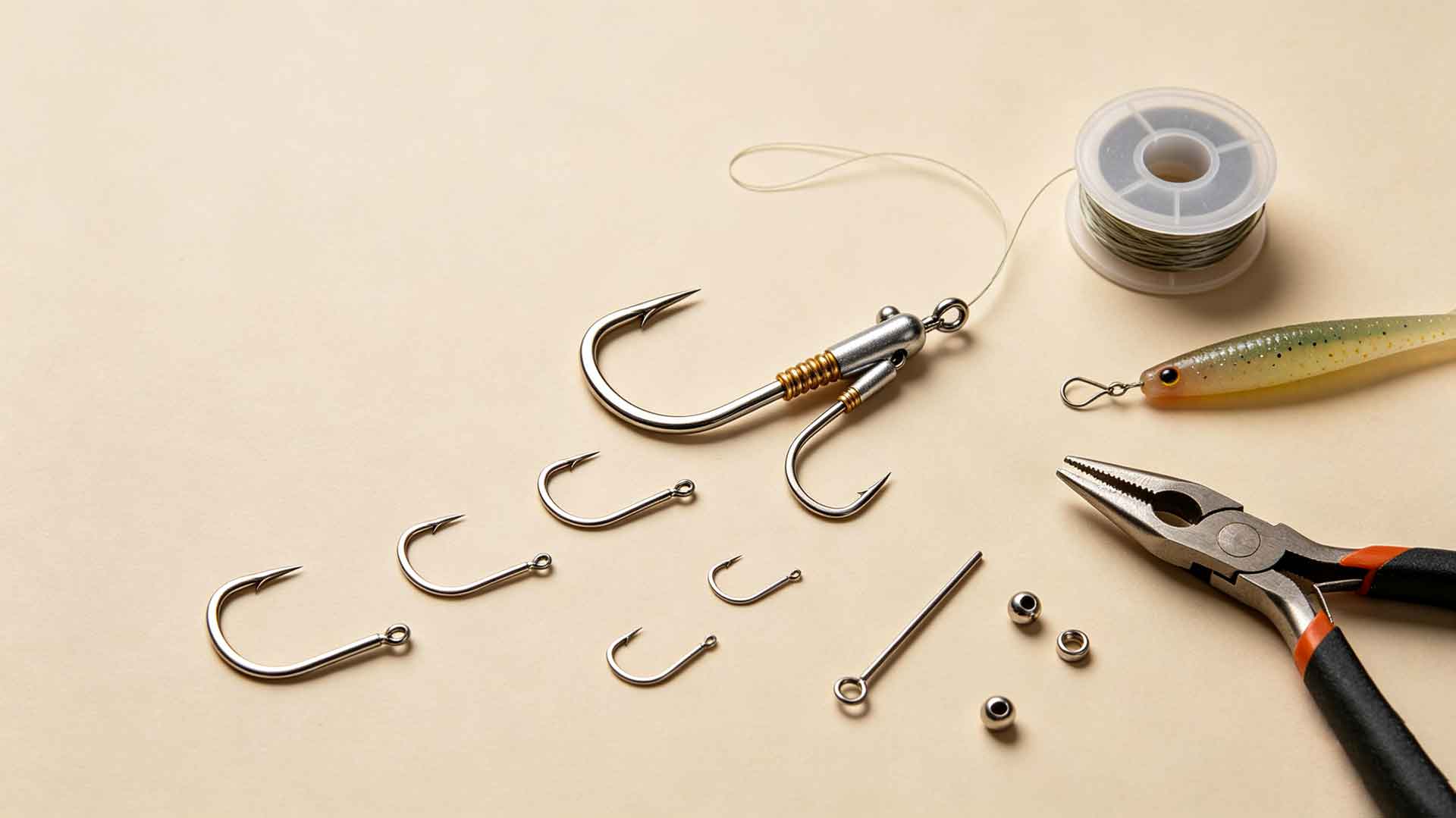
- The Strategy: This is where hook gauge (thickness) becomes your best friend. A thick, heavy-duty hook requires a massive hook-set force to penetrate. On tough days, drop down to a finer-wire hook. It penetrates the fish’s mouth with a mere flick of the wrist.
- The Pro Tip: Always check your hook sharpness using the fingernail test I mentioned in Hook Size Hacks. If it slides, sharpen it. A dull hook on a light-bite day is a guaranteed loss.
You’re five miles from the truck, you’ve broken your last spare hook, and your main hook just hit a rock and dulled.
- The Strategy: Don’t pack up. Take a small, flat river stone—the harder and finer-grained, the better. Lightly stroke the hook point from the base toward the tip. It’s not a factory finish, but it’s enough to get you back in the game for the rest of the day.
- The Habit: This is why I preach a 5-Minute Post-Fishing Routine. If you clean and inspect your gear after every trip, you won’t be scrambling to fix dull hooks in the middle of a session.
- Never use a thick-wire hook for light-biting fish.
- Always bury the point in your soft plastic when fishing heavy cover.
- Test your hook point on your thumbnail every 30 minutes.
- Match your hook size to the bait’s profile, not just your target fish.