
 o000418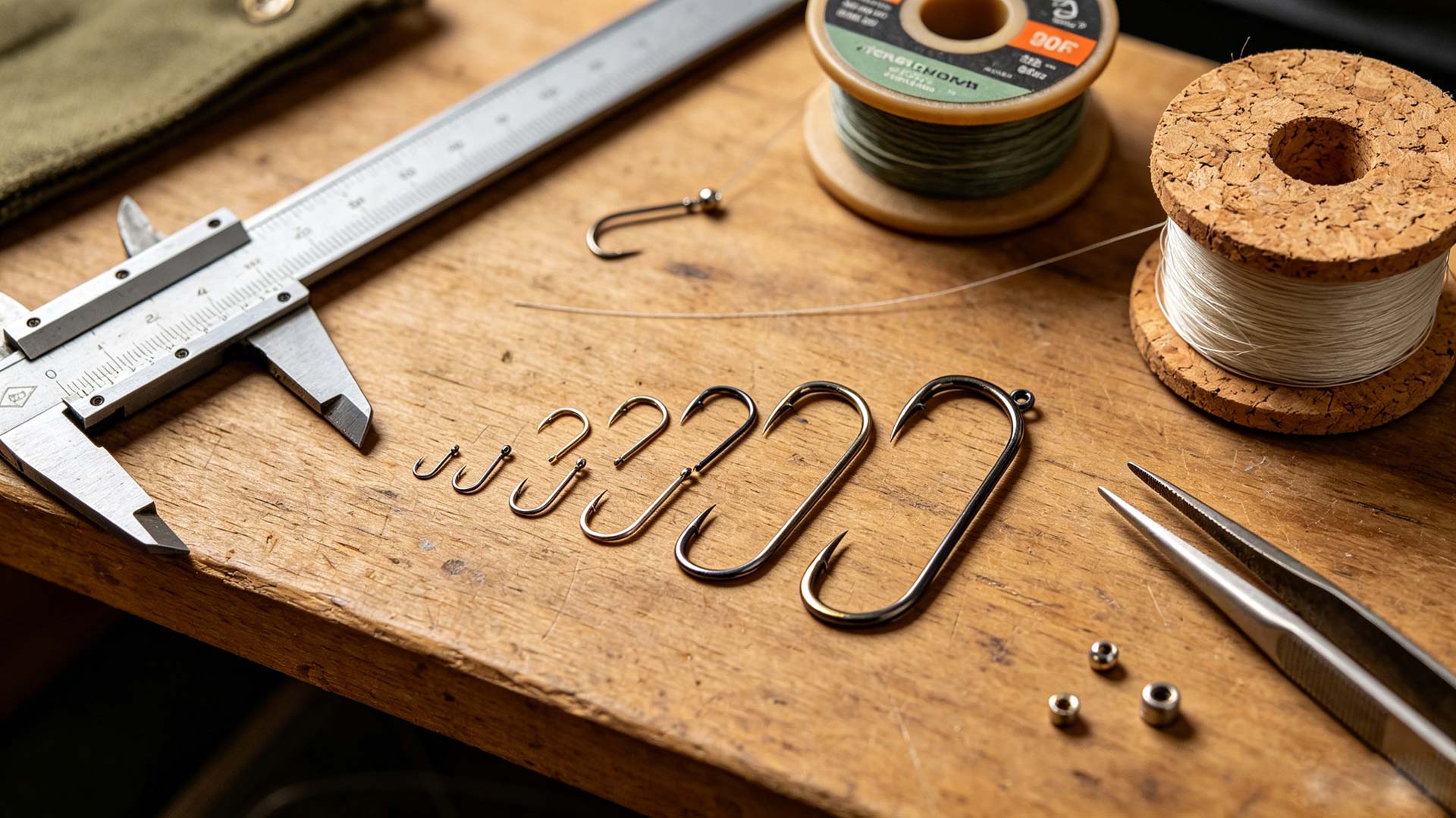
I still remember my first trip to the local tackle shop. I stared at that wall of hooks for twenty minutes, feeling completely overwhelmed by the rows of tiny, weirdly shaped metal bits. I ended up picking a pack that looked “about right,” only to lose three fish in a row because I couldn’t get a solid hookset.
It took me years of wasted trips and missed bites to realize that hook sizing isn’t just a number—it’s the difference between a “got one” and a “got away.” If you’re tired of the confusion, here is the exact cheat sheet I keep in my bag.
The “Mirror Scale” Explained
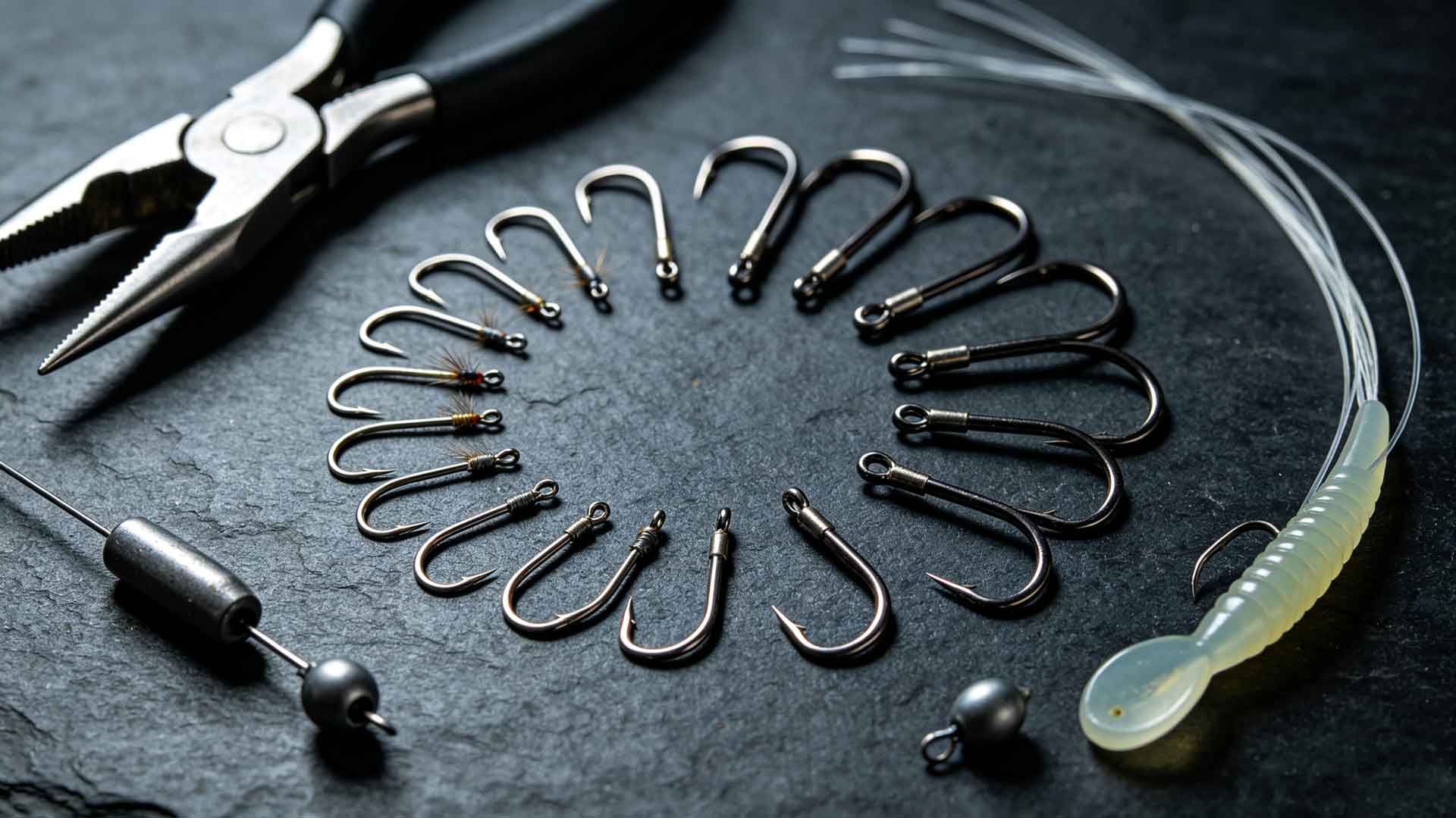
Hook sizing feels like it was designed by someone trying to mess with us, but it actually follows a simple “mirror” logic:
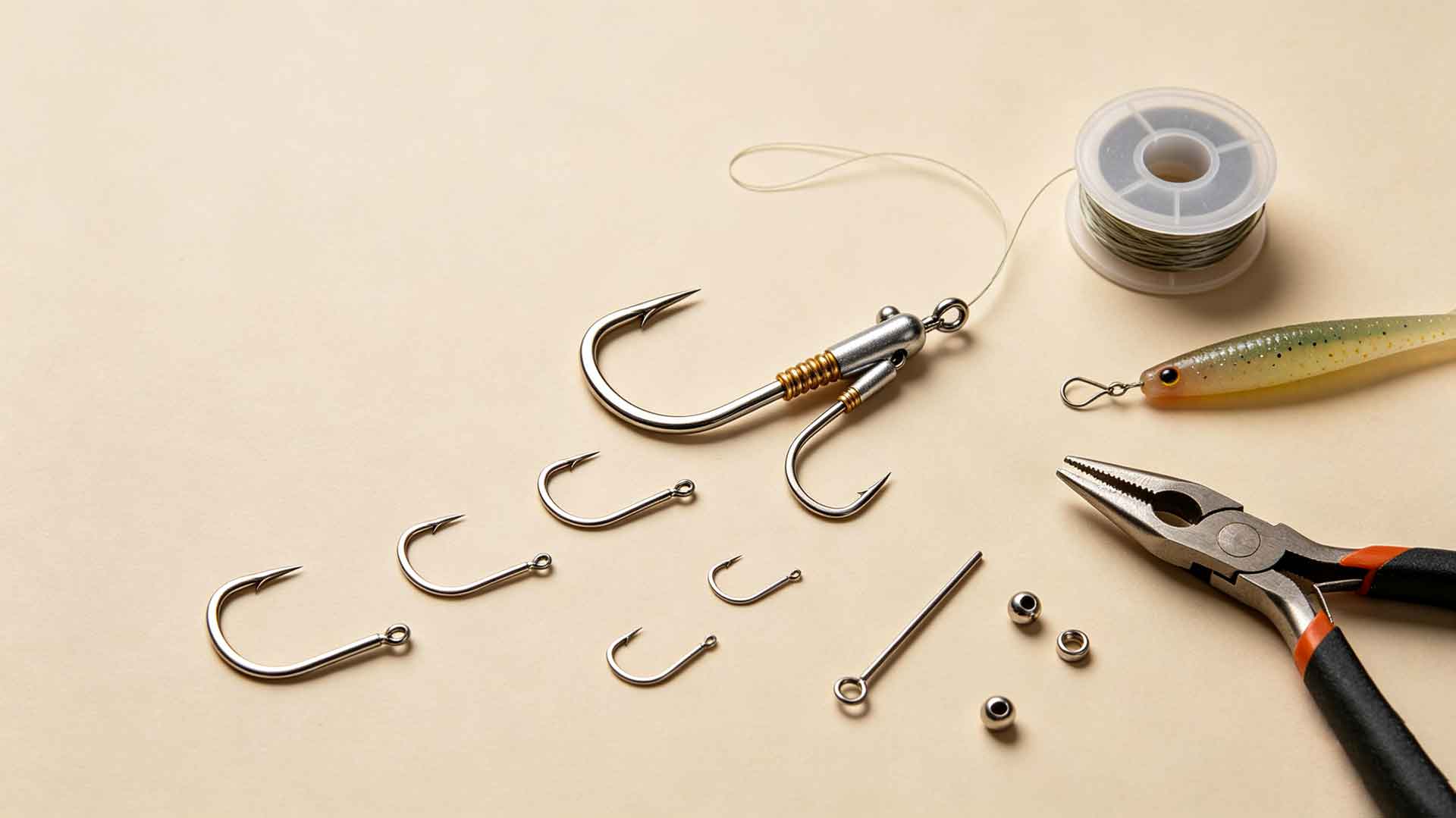
- The Standard Scale (#8 to #1): As the number gets larger, the hook gets smaller. A #8 is tiny, meant for panfish, while a #1 is a solid medium-sized workhorse.
- The “Aught” Scale (1/0 to 10/0+): Once you hit the #1, the scale flips and adds a “0” (pronounced “aught”). Now, the number grows with the hook. A 1/0 is your starting point, and a 5/0 or 8/0 is a massive chunk of metal meant for saltwater giants.
My Pro Tip: Don’t obsess over the fish’s mouth size. Focus on the bait. If the hook is too large, it chokes the action of your live bait; if it’s too small, it won’t clear the bait’s body during a strike, resulting in a missed hookset.
The Quick-Reference Bait Matcher
I’ve put together this table based on the setups that have consistently put fish in my cooler over the years. Use this as your baseline:
| Your Bait | Hook Size to Try |
| Worm (4–6 inch) | #2 – 2/0 |
| Worm (7–10 inch) | 3/0 – 5/0 |
| Live Minnow | #6 – #2 |
| Shrimp | #2 – 2/0 |
| Big Swimbait | 5/0 – 8/0 |
- Golden Rule: The hook gap (the distance between the point and the shank) should ideally be about half the width of your bait’s body. If the gap is too narrow, the bait will prevent the hook point from ever touching the fish.
Watch the “Hidden” Failure Point
Even with the perfect hook, you can still fail if you ignore the Point.
I’ve seen plenty of anglers spend a fortune on high-end rods, only to use a dull hook that’s been bouncing around a tackle box for three months. A perfectly sized dull hook is just an expensive way to lose a fish. Before you cast, drag the point across your fingernail. If it slides without catching, sharpen it or, better yet, replace it.
Building Your System
Choosing a hook is only the first piece of the puzzle. If you want to know how to match these hooks with the right rod power and line strength to ensure a 100% hookup ratio, head over to my Ultimate Beginner Fishing Setup Guide.
Getting the hook size right is a “hack,” but getting the whole system right is a strategy. Once you nail these basics, you’ll stop guessing and start catching. Now, go sharpen those hooks and get back out there—the water’s waiting.