
 o000418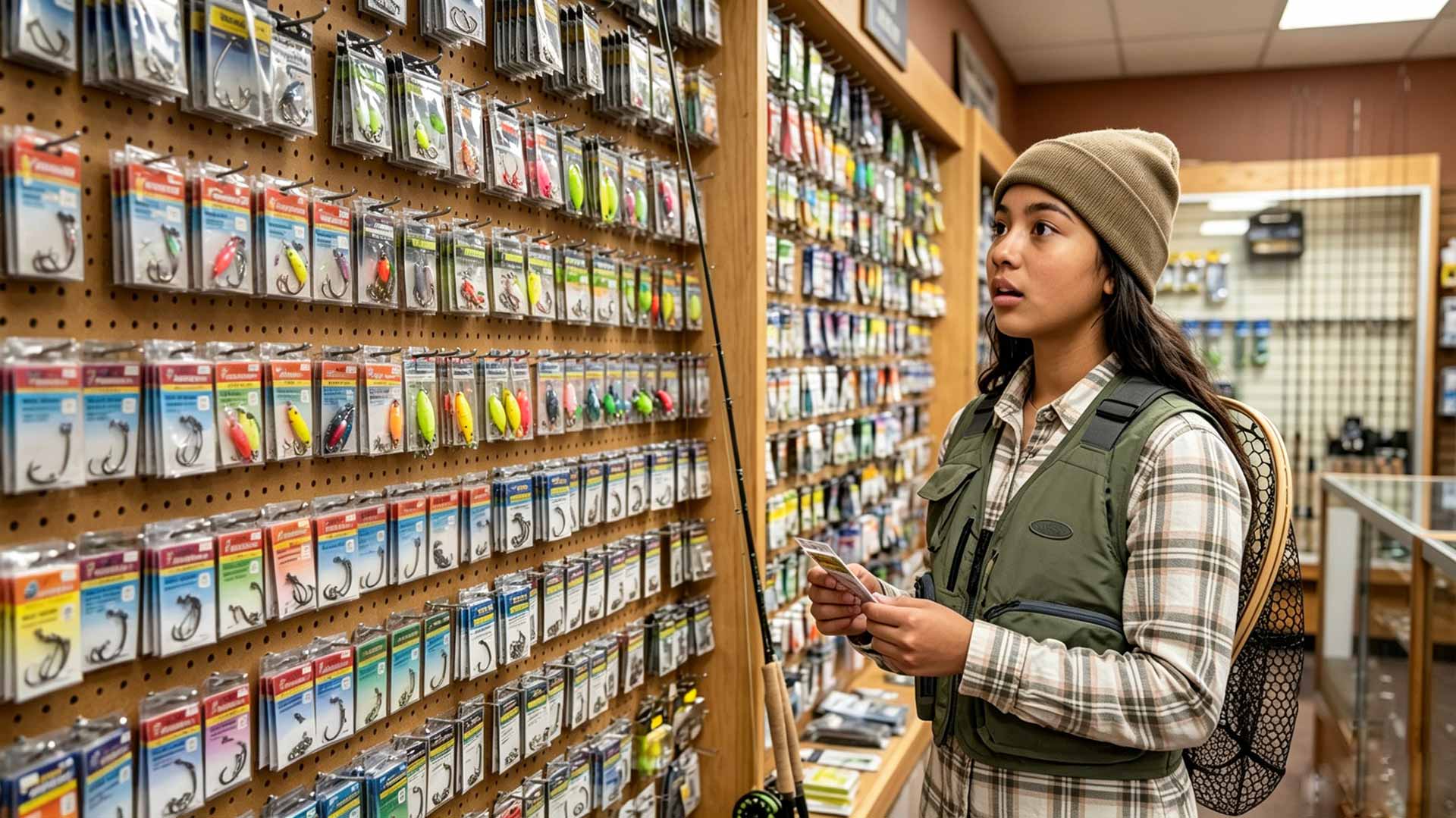
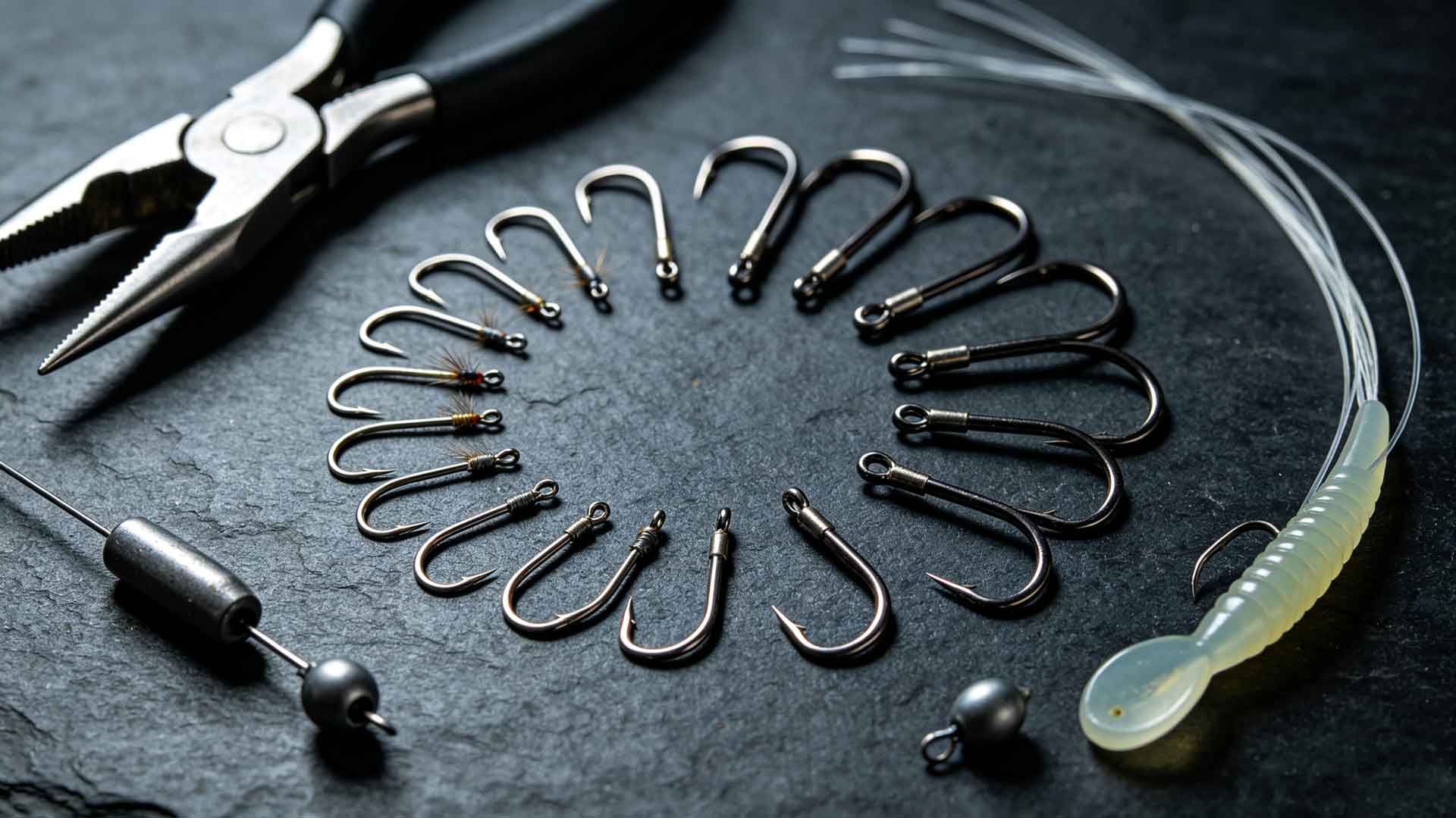
Walk into any tackle shop, and you’ll face a dizzying wall of hooks in dozens of shapes and confusing sizes. Choosing the wrong one is the fastest way to lose a trophy fish before the fight even starts. To help you navigate the aisle like a pro, let’s break down the essential hooks and the logic behind the numbers.
Understanding Hook Sizing (The Confusing Part)
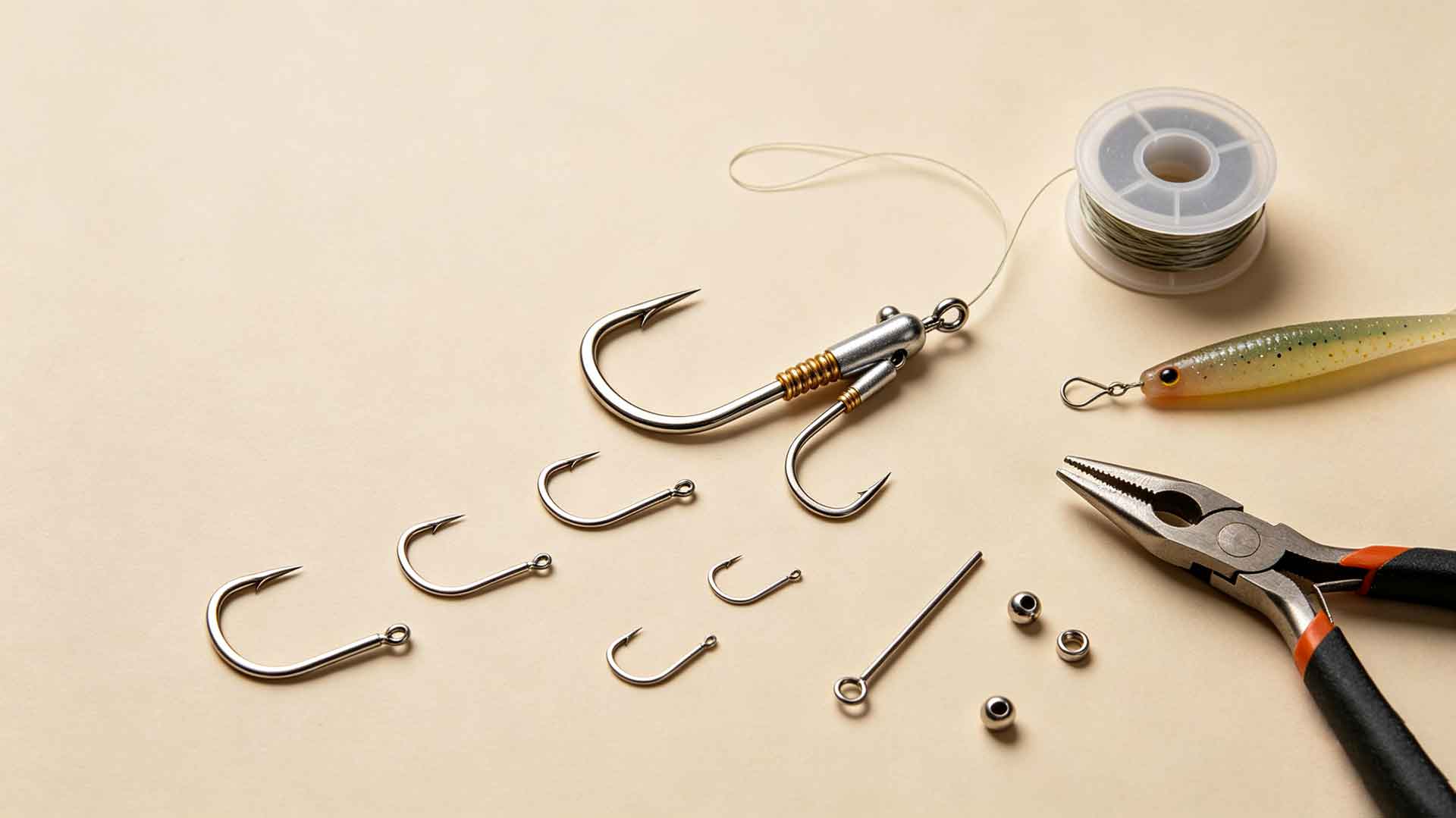
Think of hook sizing as a “mirrored scale.” It’s counter-intuitive, but once you memorize this, you’ll never look back.
- The Standard Scale (1 to 20+): As the number increases, the hook gets smaller. A size 4 is a workhorse, while a 12 is tiny—perfect for finesse trout.
- The “Aught” Scale (1/0 to 10/0+): Once you pass size 1, the scale reverses. Here, the number grows with the hook. A 5/0 is massive for saltwater, while a 1/0 is your mid-sized go-to.
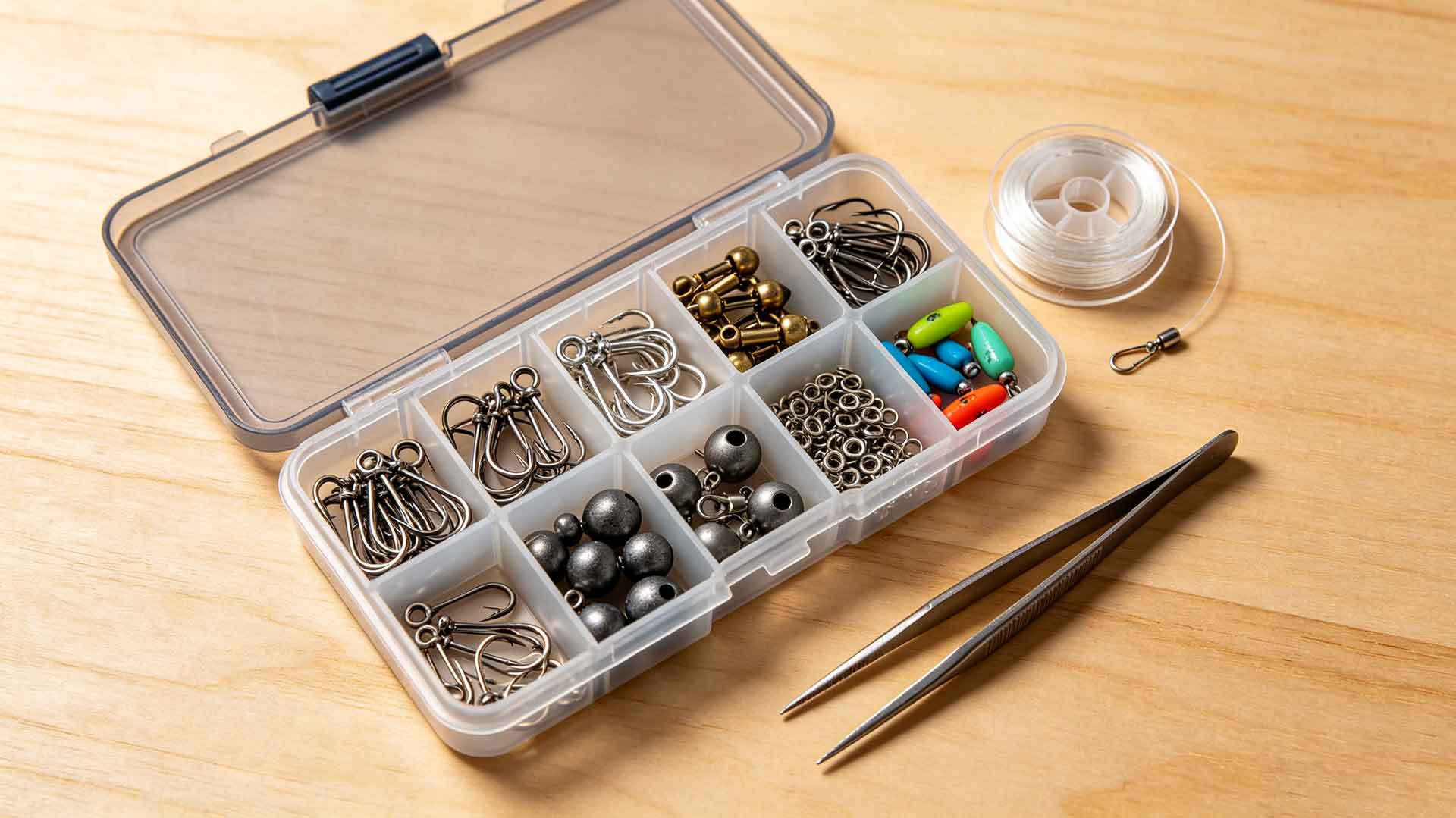
My Pro Tip: If you’re building your first tackle box, don’t buy the whole wall. Start with a balanced range of 2s, 1s, and 2/0s to cover 80% of common scenarios.
The Big Three: Hook Types and When to Use Them
1. The Classic J-Hook (Aberdeen or Octopus)
This is the traditional style most people picture. It’s versatile, simple, and effective.
- How it works: You must actively jerk the rod upward (the “hookset”) to drive the point home.
- Best for: Active bait fishing where you need to feel the bite and set the hook instantly.
2. The Circle Hook (The Conservation Hero)
Circle hooks feature a point that curves inward, which is a game-changer for fish survival.
- How it works: Do not set the hook! Let the fish run, and as it turns, the hook naturally finds the corner of the jaw.
- Best for: Catch-and-release. It rarely kills the fish, making it perfect for targeting Snapper or large Catfish.
3. The Treble Hook (The Lure Standard)
A treble features three points radiating from one shank, offering a massive “hooking surface.”
- How it works: It’s designed for lures, not bait. It catches fish on the strike, even if they hit your lure aggressively.
- Best for: Hard plastics like crankbaits or topwater lures.
The Golden Rule: Match the Bait, Not the Fish
Many beginners buy giant hooks hoping for giant fish, but this is a mistake. If your hook is too big, it kills the natural movement of your bait. A stiff, heavy hook will make a live minnow look dead instantly—and smart fish will ignore it.
The Foundation of Success: Choosing the right hook is only the first step. You also need to ensure your rod and line class are calibrated to handle that hook’s resistance. If you’re ready to put it all together and build your first effective rig, read my Ultimate Beginner Fishing Setup Guide to get the full picture of how to optimize your tackle for the 2026 season.